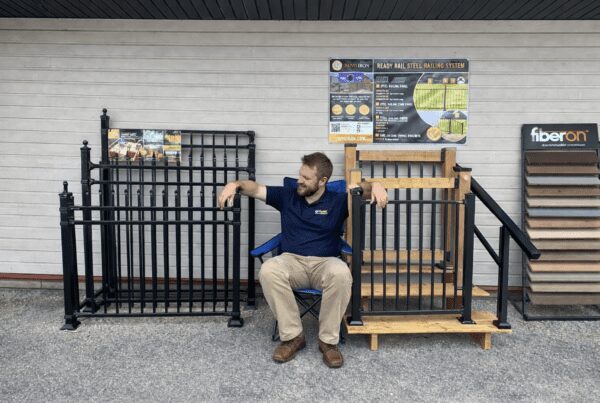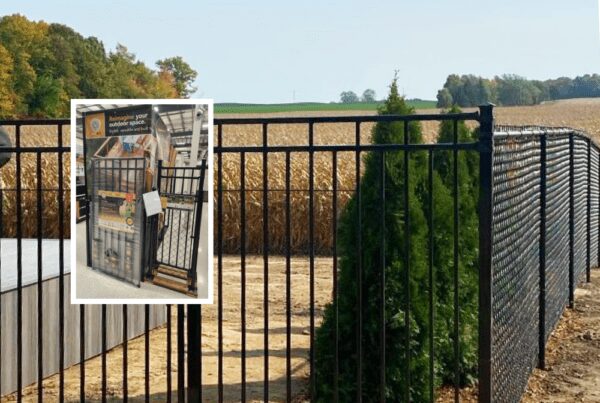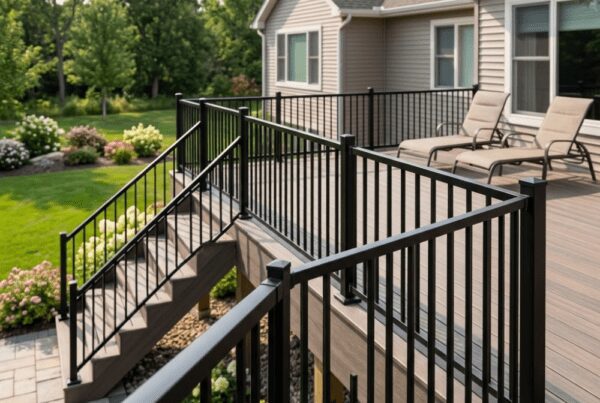
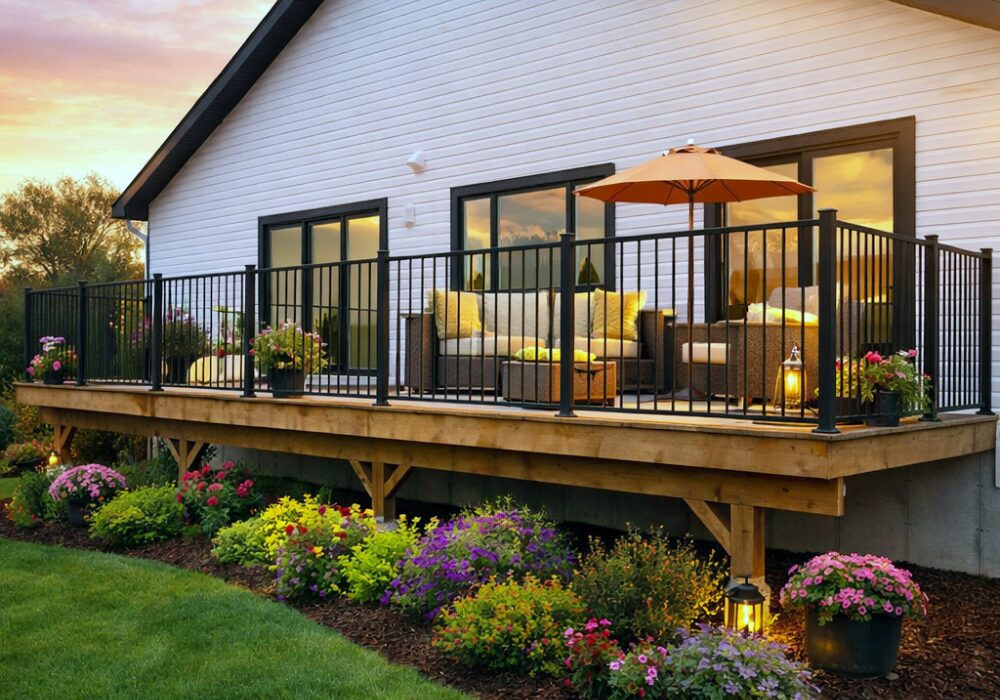
Not all railings serve the same purpose, and choosing the right one starts with understanding how they’re used. In general, railings fall into two main categories:
- Structural railings (guardrails): These are full systems designed to create a protective barrier. You’ll need these for elevated spaces like decks, porches, and balconies, or anywhere there’s a significant drop. These systems are often built using balusters or full panel guardrails.
- Support railings (handrails): These are designed to provide grip and stability rather than act as a barrier. For a few steps or entry points, a Stoop Railing or wall-mounted handrail is often all you need.
For many projects, especially stairs, the best solution is actually a combination of both. Starting with this understanding helps ensure you’re choosing the safest and most appropriate option for your space.
Stair & Entry Railings
Q: What is the best railing for stairs?
The best setup for stairs is typically a combination of a structural railing and a handrail. For example: A Stoop Railing or Ready Rail panel system on one side provides structure and safety and a handrail on the other side adds continuous support and improves accessibility. Even when you already have a structural system like Ready Rail, adding a handrail can make stairs more comfortable and secure to use.
Q: What is the best railing for outdoor stairs?
For outdoor stairs, the best option is a weather-resistant railing system, like Ready Rail made from powder-coated aluminum or steel. A Stoop Railing kit paired with a Wall-Mounted Handrail offers the ideal balance of durability, safety, and ease of installation, especially for front steps and entryways exposed to the elements.
Q: What railing is best for indoor stairs?
A Wall-Mounted Handrail is the most effective solution for indoor stairs. It provides reliable support, installs easily on drywall, wood, or masonry, and works well in narrow or enclosed staircases where a full railing system may not be required.
Q: Do I need a railing for my front steps?
Yes. A railing is strongly recommended for front steps to improve safety, accessibility, and stability, especially in wet or icy conditions. For most homes, a Stoop Railing kit combined with a handrail creates a complete and secure entry solution.
Q: Can I install a stair railing myself?
Yes. Many modern railing systems are designed for DIY installation. Pre-packaged railing kits include all required components, hardware, and instructions, allowing homeowners to complete most stair railing projects with basic tools in just a few hours.
Deck, Porch & Outdoor Railings
Q: What is the best railing for decks?
The best railing for decks is a steel railing system that offers strength, durability, and flexibility. Systems like Ready Rail are designed to handle outdoor conditions while allowing panels to be cut and adjusted to fit different layouts, making them ideal for decks, porches, and elevated spaces.
Q: What railing should I use for a porch?
For porches, a complete railing system is recommended to create a safe and finished perimeter. Our options include baluster systems for a more traditional look or our Ready Rail panels for faster installation and a modern finish. Both provide a strong barrier while enhancing the overall design.
Q: What is the best railing for a balcony?
A balcony requires a secure, continuous railing system that meets safety requirements while maintaining visibility and style. Railing systems like our balusters or Ready Rail panels are ideal because they provide a solid barrier without blocking views, making them both functional and visually appealing.
Q: Are outdoor railings weather-resistant?
Yes. High-quality outdoor railings are designed with powder-coated finishes that protect against rust, corrosion, and UV exposure. Materials like aluminum and steel are specifically chosen for their ability to withstand harsh weather conditions with minimal upkeep.
Q: Can deck railings be customized to fit my space?
Yes. Nuvo systems are designed with flexibility in mind. Panels can be cut down for smaller sections, components can be combined or extended for larger spans, and adjustable brackets allow installation on both flat and angled surfaces. This makes it easy to tailor the system to your exact layout without starting from scratch.
Installation & DIY
Q: Are railing kits easy to install?
Yes. Railing kits are engineered for simple, efficient installation. With pre-measured components and included hardware, most systems eliminate guesswork and significantly reduce installation time compared to building from scratch.
We also provide DIY installation videos on YouTube, including:
- Stoop railing installation
- Baluster system installation (rectangular, square and round)
- (Handrail installation coming soon)
These resources help guide you step-by-step through the process.
Q: Do railing kits come with everything needed?
Not all railing kits are the same. At Nuvo, we offer a range of options depending on budget, experience level, and project complexity. Our goal is to include as much as possible in each kit, with options across our handrail systems, Stoop Railing kits, and our Ready Rail systems. This helps reduce extra purchases and simplify installation.
Q: How long does it take to install a railing?
Installation time depends on the project:
- Stair or handrail installations: typically 1–3 hours
- Deck or full railing systems: half day to full day
Pre-packaged systems help reduce installation time by simplifying the process.
Q: Can I install railing on concrete, brick, or wood?
Yes. Most railing systems are designed to mount on a variety of surfaces, including concrete, brick, wood, composite, drywall, and masonry, using the appropriate anchors and hardware.
Q: Do I need professional help to install deck railings?
Not always. Many homeowners can install railing systems themselves, but hiring a professional can be beneficial if your area has strict building codes, the project is large or complex, or you’re not confident in DIY installation. Using pre-engineered kits can also reduce contractor labour costs, since installation is faster and more straightforward.
Buying & Decisions
Q: What is the easiest railing to install?
A Stoop Railing kit is typically the easiest to install because it is designed for small stair projects and includes everything needed in one package. Wall-Mounted handrails are also quick to install and require minimal tools.
Q: What is the most durable railing material?
Both steel and aluminum are excellent choices:
- Steel: stronger and ideal for decks and larger structures
- Aluminum: lightweight, rust-resistant, and great for stairs and entryways
Q: What should I consider when choosing a railing?
When choosing a railing, consider:
- The location (stairs, deck, balcony)
- The material (steel vs aluminum)
- The installation method
- The level of maintenance required
- The overall design and finish
Q: Are railing kits worth it?
Yes. Railing kits are worth it because they simplify the entire process. They reduce planning time, eliminate compatibility issues, and provide a reliable, professional-looking result with less effort.
Q: Where can I buy stair railings?
Stair railings are available through local retailers and building supply stores. You can use the Where to Buy page on NuvoIron.com to find a location near you.
Q: What are the best railing materials for Canadian weather?
For Canadian climates, powder-coated steel and aluminum are the best options. These materials are designed to handle moisture, temperature changes, and seasonal conditions without deteriorating.
Q: What is the difference between a handrail and a railing system?
- A handrail is mounted to a wall and provides grip and support
- A railing system is a full structure that creates a protective barrier
Most projects benefit from using both together for maximum safety and functionality.